:::: MENU ::::

Tuesday, 22 March 2011


"Equinoxe" was the second major-label album release by French musician Jean Michel Jarre, released on Disques Dreyfus (with license to Polydor) in late 1978.
The album reflects a day in the life of a human being, from morning to night. Parts 1 to 4 (i.e. side A) and tracks 5 to 8 (side B) segué smoothly from one to the next.
Jarre had developed his sound, employing more dynamic and rhythmic elements, particularly a greater use of sequencing on basslines. Much of this was achieved using custom equipment developed by his collaborator Michel Geiss. As the follow up album to "Oxygene", "Equinoxe" offers the same mesmerizing affect, with rapid spinning sequencer washes and bubbling synthesizer portions all lilting back and forth to stardust scatterings of electronic pastiches. Using more than 13 different types of synthesizers, Jarre combines whirling soundscapes of multi-textured effects, passages, and sometimes suites to culminate interesting electronic atmospheres. Never repeating the same sounds twice, it is obvious that the science fiction hype of the late 70's played a large part in the making of this album. Computerized rhythms and keyboard-soaked transitions scurry by, replaced by even quicker, more illustrious ones soon after. There is always a pulsating beat or a fluttering tempo happening somewhere in each of the tracks, which are titled as a numbered sequence one to eight. Each track harbors its own energy and electronic fleetness, but none are identical in sound or pace. So much electronic color is added to every track that it is impossible to concentrate on any particular segment, resulting in waves of synth drowning the ears at high tide.
Two singles were released from the album, "Équinoxe Part 5" first, and then "Équinoxe Part 4".

Track List:

01. "Équinoxe Part 1" – 2:23
02. "Équinoxe Part 2" – 5:01
03. "Équinoxe Part 3" – 5:11
04. "Équinoxe Part 4" – 6:53
05. "Équinoxe Part 5" – 3:47
06. "Équinoxe Part 6" – 3:23
07. "Équinoxe Part 7" – 7:25
08. "Équinoxe Part 8" – 5:02

Released: December 1978
Recorded: January 1978 – August 1978
Genre: Electronica, New Age
Length: 39:09
Label: Disques Dreyfus
Producer: Jean Michel Jarre

Personnel:
Jean-Michel Jarre – ARP 2600 Synthesizer, EMS Synthi AKS, VCS 3 Synthesizer, Yamaha CS-80, Oberheim TVS-1A, RMI Harmonic Synthesizer, RMI Keyboard Computer, ELKA 707, Korg Polyphonic Ensemble 2000, Eminent 310U, Mellotron, ARP Sequencer, Oberheim Digital Sequencer, Matrisequencer 250, Rhythmicomputer (Korg MiniPops 7), EMS Vocoder

"Honky Château" is the fifth studio album by British singer/songwriter Elton John, released in 1972. In 2003, the album was ranked number 357 on Rolling Stone magazine's list of the 500 greatest albums of all time.
Considerably lighter than Madman Across the Water, Honky Chateau is a rollicking collection of ballads, rockers, blues, country-rock, and soul songs. On paper, it reads like an eclectic mess, but it plays as the most focused and accomplished set of songs Elton John and Bernie Taupin ever wrote. The skittering boogie of "Honky Cat" and the light psychedelic pop of "Rocket Man" helped send Honky Chateau to the top of the charts, but what is truly impressive about the album is the depth of its material. From the surprisingly cynical and nasty "I Think I'm Gonna Kill Myself" to the moving ballad "Mona Lisas and Mad Hatters," John is at the top of his form, crafting immaculate pop songs with memorable melodies and powerful hooks. While Taupin's lyrics aren't much more comprehensible than before, John delivers them with skill and passion, making them feel more substantial than they are. But what makes Honky Chateau a classic is the songcraft, and the way John ties disparate strands of roots music into distinctive and idiosyncratic pop -- it's one of the finest collections of mainstream singer/songwriter pop of the early '70s.

Track List:

01. "Honky Cat" – 5:13
02. "Mellow" – 5:32
03. "I Think I'm Going to Kill Myself" – 3:35
04. "Susie (Dramas)" – 3:25
05. "Rocket Man (I Think It's Going to Be a Long, Long Time)" – 4:45
06. "Salvation" – 3:58
07. "Slave" – 4:22
08. "Amy" – 4:03
09. "Mona Lisas and Mad Hatters" – 5:00
10. "Hercules" – 5:20
11. "Slave" [Alternate Take] (Bonsu Track) – 2:53

Released: 19 May 1972
Recorded: Château d'Hérouville, Hérouville, France, January 1972
Genre: Rock
Length: 45:15
Label: Uni/DJM Records
Producer: Gus Dudgeon
Engineer: Ken Scott
Mastering Engineer: "Legs" Larry Smith
Remastering: Tony Cousins
Editing: Gus Skinas
All songs written by: Elton John and Bernie Taupin

Personnel:
Elton John - acoustic and electric pianos, organ
Davey Johnstone - guitars, banjo, mandolin
Dee Murray - bass
Nigel Olsson - drums, congas, tambourine
Ivan Jullien (fr.) - trumpet
Jacques Bolognesi (fr.) - trombone
Jean-Louis Chautemps & Alain Hatot - saxophones
Jean-Luc Ponty - electric violin
"Legs" Larry Smith - tap dance
David Hentschel - A.R.P. synthesizer
Ray Cooper - congas
Gus Dudgeon - rhino whistle & backing vocals
Madeline Bell, Liza Strike, Larry Steel, Tony Hazzard - additional backing vocals
"The Landlocked Sessions" were recordings made in 1969/1970 after the Beach Boys left Capitol records and signed on to the Warner/Reprise roster. The Boys’ new label rejected these recordings, feeling they did not capture the group at their best (in a purely commercial sense). "Landlocked" by the Beach Boys is a much circulated, rejected version of what would eventually become "Sunflower". After leaving Capitol Records in 1969, the band compiled an album's worth of demos and recordings for approval by their new label. In 1970 Warner/Reprise smartly demanded that the band continue work on new songs. The Beach Boys went back to the drawing board, abandoning the Landlocked songs at the time. (A second rejected "version" is available in bootleg form as Add Some Music to Your Day.) Some of the songs in Landlocked remained unreleased for decades while others made their way onto future Beach Boys albums. "Take a Load off Your Feet," and "'Til I Die," were first heard on Landlocked but made it onto "Surf's Up". "Good Time" was eventually recorded for "Love You", "Big Sur" was released on "Holland", and Mike Love's "When Girls Get Together" was heard on 1980's classic "Keepin' The Summer Alive". Other songs like "I Just Got My Pay" stayed in a vault until the release of the "Good Vibrations: Thirty Years of the Beach Boys Box Set" in 1993. Standout tracks include "Loop De Loop" which was a collaboration between Brian Wilson and Van Dyke Parks (later heard on Endless Summer Soundtrack) and "Lady" which was a Dennis Wilson composition. Clearly, this is a record for diehards only. It is worth tracking down for Beach Boys fans who are interested in their recording process, especially in the post-Pet Sounds world where other members like Dennis and Al Jardine began taking a more active role in the group. Landlocked is the only time when these songs fit into their original context. To that end the well-developed demo of "'Til I Die" is fascinating. It is perhaps the best song on this bootleg and fit in perfectly on their 1971 album. But here is where it first appeared.


01. "Loop De Loop (Flip Flop Flyin' In An Airplane)" - 2:59
02. "Susie Cincinnati" - 2:56
03. "San Miguel" - 2:26
04. "H.E.L.P. Is On The Way" - 2:19
05. "Take A Load Off Your Feet" - 2:33
06. "Over The Waves" - 1:02
07. "I Just Got My Pay" - 2:21
08. "´Til I Die" - 4:59
09. "Good Time" - 3:08
10. "Big Sur" - 2:40
11. "Lady" - 2:20
12. "When Girls Get Together" - 3:18

Released: 1970
Recordings: 1969/1970
Label: Warner/Reprise Records
Genre: Pop, Surf Rock
Length: 37:14
Producer: The Beach Boys

Personnel:
Mike Love – lead vocals
Carl Wilson – lead guitar, vocals
Al Jardine – guitar, vocals
Dennis Wilson – drums
Bruce Johnston – bass, keyboards, vocals
Brian Wilson – keyboards, bass, vocals

Monday, 21 March 2011


"Gaudi" was the last collaboration between Alan Parsons and his musical partner Eric Woolfson under the "Alan Parsons Project" name. An album inspired by the life and works of architect Antonio Gaudi, "Gaudi" is a very rich, elegant, powerful album for the Project to go out with. "La Sagrada Familia" is a beautiful orchestral rock epic, with a great lead vocal by John Miles. Longtime Project vocalist Lenny Zakatek takes the mike on "Too Late," an awesome pop-rocker that could've been (and should've been) a huge hit for the group, though it wasn't released as a single. Eric Woolfson sings on "Closer To Heaven," a very beautiful, heavenly Project number. The lone single release from the album, "Standing On Higher Ground," is a very cool, catchy tune, sung by Geoff Barradale of the mid-80's group Vitamin Z. John Miles returns for another lead vocal on "Money Talks," which is a great, down & dirty rocker. Woolfson then returns once more for the lovely "Inside Looking Out," and the album concludes on a very high note with a short instrumental reprise of "La Sagrada Familia," featuring excellent spanish guitar by Project veteran Ian Bairnson. As always on a Project album, the performances, production and sound quality are sharp & superior, and the outstanding orchestral touches by Andrew Powell is the icing on an already delicious musical cake. "Gaudi" is a gorgeous, dazzling, memorable album to close out the Alan Parsons Project with.

Tracklist:

01. "La Sagrada Familia" (lead vocal John Miles backing vocal Eric Woolfson) – (8:46)
02. "Too Late" (lead vocal Lenny Zakatek) – (4:31)
03. "Closer to Heaven" (lead vocal Eric Woolfson) – (5:52)
04. "Standing on Higher Ground" (lead vocal Geoff Barradale) – (5:03)
05. "Money Talks" (lead vocal John Miles) – (4:26)
06. "Inside Looking Out" (lead vocal Eric Woolfson) – (6:22)
07. "Paseo de Gracia" (Instrumental) – (3:47)

Released: January 1987
Recorded: October 1985 – August 1986 The Grange, Mayfair Studios
Genre: Progressive rock, Pop rock
Length: 38:47
Label: Arista Records
Producer: Alan Parsons, Eric Woolfson
All songs written by: Alan Parsons and Eric Woolfson

Personnel:
John Miles, Lenny Zakatek, Geoff Barradale, Chris Rainbow (vocals)
Eric Woolfson (vocals, keyboards)
Ian Bairnson (guitars)
Richard Cottle (synthesizers, saxophones)
Laurie Cottle (bass)
Stuart Elliot (drums, percussions)
David Cripp (horn leader)
John Heley (cello)
Bob Howes (tympani, conductor)

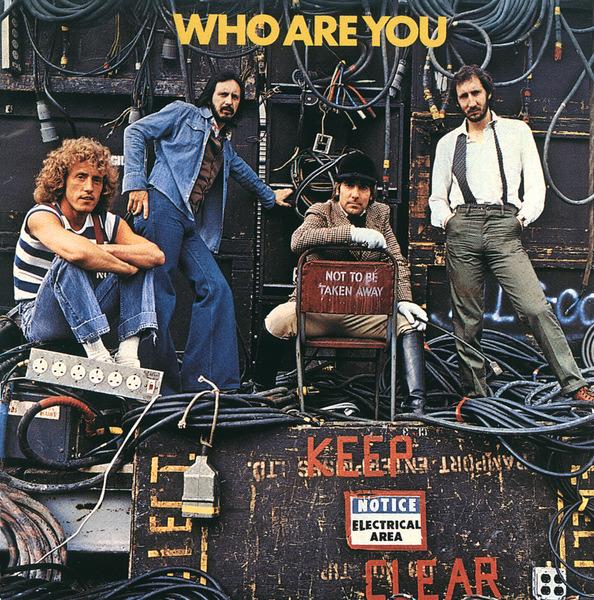
"Who Are You" is the eighth studio album by English rock band The Who. It is The Who's last album with Keith Moon as the drummer; Moon died approximately three weeks after the release of this album.
"Who Are You" was put out at a time when the two major camps of rock, progressive rock and punk rock, were conflicting due to their antipodal styles. Pete Townshend's compositions were written as an attempt to bring the two styles together. The album showcases some of the most complicated song structures guitarist Townshend had ever composed, with multiple layers of synthesizer and strings. Many of the songs also represented another attempt by Townshend to complete his long-contemplated Lifehouse project. Like Who's Next, many of whose songs were also inspired by Lifehouse, many tracks on Who Are You feature prominent synthesizer parts and lyrics about songwriting and music as a metaphor for life (as indicated by titles like "Music Must Change", "Guitar and Pen", "New Song", and "Sister Disco"). "Sister Disco" seems to mourn the death of disco, although it could be construed to be a criticism of it. Nevertheless, the song could be interpreted to be about a prositute character within a larger Tommy-like concept album.

Track List:
01. "New Song" (Pete Townshend) – 4:12
02. "Had Enough" (John Entwistle) – 4:30
03. "905" (Entwistle) – 4:02
04. "Sister Disco" (Pete Townshend) – 4:21
05. "Music Must Change" (Pete Townshend) – 4:37
06. "Trick of the Light" (Entwistle) – 4:06
07. "Guitar and Pen" (Pete Townshend) – 5:58
08. "Love Is Coming Down" (Pete Townshend) – 4:06
09. "Who Are You" (Pete Townshend) – 6:21
10. "Guitar And Pen" (Alternate Version) (Pete Townshend) - 5:58

Released: 18 August 1978
Recorded: October 1977 – April 1978 at Ramport, Battersea; Olympic Studios; RAK Studios, St John's Wood and Pete's own Studio in Goring-on-Thames
Genre: Rock
Length: 43:00
Label: Polydor
Producer: Jon Astley, Glyn Johns, The Who

Personnel:
Roger Daltrey – lead vocals, percussion
John Entwistle – bass guitar, backing vocals, synthesizer
Keith Moon – drums
Pete Townshend – guitar, backing vocals, piano, synthesizer
Rod Argent – synthesizer, piano
Ted Astley – string arrangement
Andy Fairweather-Low – backing vocals, Guitar

Sunday, 20 March 2011

"K" is the debut album by Kula Shaker, released September 16, 1996. The album reached the #1 position in the UK charts.
By the mid-'90s, most bands had abandoned the sounds and sensibilities of late-'60s psychedelia, which is what makes Kula Shaker's debut album, K, such a weird, bracing listen. The band doesn't simply revive the swirling guitar and organ riffs of psychedelia, it embraces the mysticism and Eastern spirituality that informed the music. On both "Tattva" and "Govinda," lead singer Crispian Mills has adapted portions of Sanskrit text for the lyrics, chanting Indian mantras without a hint of embarrassment. Similarly, Kula Shaker are unashamed about their devotion to Hendrix, Traffic, and the Beatles, cutting their traditionalist tendencies with an onslaught of volume, overdriven guitars, and catchy melodies -- though they have a song called "Grateful When You're Dead," a homage to Jerry Garcia and his band The Grateful Dead. The Grateful Dead's psychedelic rock style is an influence on Kula Shaker's first and second albums. The hidden track after "Hollow Man" is a recording of A. C. Bhaktivedanta Swami Prabhupada, the founder of the International Society for Krishna Consciousness, speaking about his own guru. All of their psychedelic sensibilities derive from British rock, not the more experimental American counterpart. Kula Shaker may play well -- they have a powerful rush that makes you temporarily forget how classicist their music actually is -- but they still have trouble coming up with hooks. About half the record ("Hey Dude," "Tattva," "Govinda," "Grateful When You're Dead") has strong melodies, while the rest just rides by on the band's instrumental skills. Consequently, much of K doesn't stick around once the record is finished, but the singles remain excellent blasts of colorful neo-psychedelia.

Track List:
01. "Hey Dude" (Kula Shaker, Mills) - 4:09
02. "Knight on the Town" (Kula Shaker, Mills) - 3:25
03. "Temple of Everlasting Light" (Bevan, Mills) - 2:33
04. "Govinda" (Kula Shaker, Mills) - 4:57
05. "Smart Dogs" (Kula Shaker, Mills) - 3:17
06. "Magic Theatre" (Bevan, Mills) - 2:39
07. "Into the Deep" (Bevan, Mills) - 3:48
08. "Sleeping Jiva" (Bevan, Darlington, Mills) - 2:03
09. "Tattva" (Kula Shaker, Mills) - 3:45
10. "Grateful When You're Dead/Jerry Was There" (Kula Shaker, Mills) - 5:42
11. "303" (Bevan, Mills) - 3:09
12. "Start All Over" (Mills) - 2:36
13. "Hollow Man, Pts. 1 & 2" (Bevan, Mills) - 19:26

Released: September 16, 1996
Recorded: January–May, 1996 at Eden, RAK, Townhouse, Chipping Norton, Livingston, The Pierce Room, Wessex, Maison Rouge, Eastcote Studios
Genre: Psychedelic rock, Britpop
Length: 48:51 (not including 13:04 silence)
Label: Columbia
Produced-By: John Leckie, Shep & Dodge, Crispian Mills

Personnel:
Crispian Mills (vocals, electric & acoustic guitars, tamboura)
Jay Darlington (piano, Mellotron, organ)
Alonza Bevan (piano, bass, tabla, background vocals)
Paul Winterhart (drums)
The Kick Horns (horns)
Himangsu Goswami (tabla)

Third album from the son of Don Cherry & brother of Neneh Cherry follows 2000's 'Living In The Present Future'. Working with a variety of producers including Tim Simenon (Massive Attack) & Al Stone (Bjork), he has moved away from the stripped-down, live feel of his first two albums towards a bigger, more panoramic sound utilizing electronic elements. With personal lyrics colored by his worldview following the events of 9/11, it includes the single 'Skull Tattoo'. Eagle-Eye Cherry offers up his third album, "Sub Rosa", some five years after the runaway success of ´Save Tonight´, three years after his mainly unremarkable second album "Living In The Second Future", after some extensive touring and even a guest appearance on Santana's Supernatural album. After a late start (he only started song-writing in 1996, age 26) the man has been busy. As expected from Eagle-Eye, the vocals are as warm, rich and sweet as molten caramel, making the album the aural equivalent of an afternoon in a big leather sofa sipping a macchiato. His voice resonates consistently through the variety of songs on offer, providing a touchstone against losing the way in some of the more experimental pieces. ´Skull Tattoo´ and ´Feels So Right´ are as good examples of pop songs as you could want to hear anywhere, with simple catchy choruses, tunes that you will be humming hours later and insistent rhythms that make you tap your toes or even want to dance. Both seem made for sing-along encores when Eagle-Eye goes back on tour. Feels So Right in particular seems like the Save Tonight of the album, although its impact may be heightened by the fact that the relatively weak How Come precedes it. Musically, Eagle-Eye rings a few changes around the guitar, drum and bass basics, with some strings adding depth in Don't Give Up, guitar solos and electronica beepings in Up To You and some particularly funky bass in Crashing Down. The final song, If You Don't Know By Now, ends with what sounds like a fun, spontaneous jamming session of real musicianship. Eagle-Eye's original vocation as a drummer also shines through with some great drum rhythms in Skull Tattoo and good use of percussion in Crashing Down. That said, it is the repetitive, almost militaristic, drums on How Come which make that song a real disappointment. Lyrically, Cherry tends towards pared-down pop, which sometimes means catchy, but sometimes means monotony or banality. Repeating the phrase, "How come," six times does not a chorus make. At times, though, the lyrics exhort listeners to a better world ("We must believe that if we give we will receive / We must believe it's gonna get better") and it seems that "How come" is a heartfelt (if overly repeated) cry for meaning.

Track List:
01. "This Paralysis" - 4:07
02. "Skull Tattoo" - 3:22
03. "The Strange" - 3:52
04. "It's Up To You" - 3:39
05. "Don't Give Up" (featured on the Disney movie Holes) - 3:58
06. "How Come" - 4:12
07. "Feels So Right" - 4:19
08. "Crashing Down" - 5:06
09. "Twisted Games" - 3:29
10. "The Food Song" - 4:19
11. "If It Can't Be Found" - 4:55
12. "If You Don't Know By Now" - 5:06

Released: 06 Oct 2003
Label: Polydor
Genre: Rock
Length: 50:02
Mixed By: Adrian Bushby
Producer: Al Stone, Cameron McVey, Paul Simm, Pete Davis
Programmed By: Jony Rockstar , Ned Douglas, Pete Davis
Recorded By: Christian Edgren

In 1994 Bainbridge was signed to Ross Fraser and John Farnham's newly-formed Gotham Records label. Fraser first heard Bainbridge when he received a tape in the mail and was interested by the combination of voice and guitar. "Mouth" was Bainbridge's debut release and the first song released from her debut album "The Garden". The album has a main genre of alternative pop songs. Sweet but never saccharine, Merrill Bainbridge demonstrated that pop and pop-rock could be sugary and edgy at the same time. Four singles were taken from this album, ´Under The Water´, The Power Of One´ and the fourth and final song "Sleeping Dogs" was released in Australia in February 1996 and featured Bee Gees song "I Started a Joke" which was used for the bridge of the track. The song only peaked at number fifty-five in Australia. Even stronger are the hauntingly seductive "Garden In My Room," The Innocent "Song For Neen" and the gorgeous "Julie." In contrast to artists who tend to avoid sentimentality and unapologetically pretty melodies for fear of not being taken seriously, Bainbridge thrives on them and savors their delights. But not one of her songs is insipid or corny. Bainbridge is clearly an artist of depth and substance.

Track List:
01. "Garden in My Room" (Bainbridge) – 4:32
02. "Under the Water" (Bainbridge, Owen Bolwell, Stan Paulzen) – 4:13
03. "Miss You" (Bainbridge) – 3:03
04. "Mouth" (Bainbridge) – 3:25
05. "Julie" (Bainbridge) – 3:56
06. "Song for Neen" (Bainbridge) – 2:40
07. "Sleeping Dogs" (Bainbridge, Barry Gibb, Robin Gibb, Maurice Gibb) – 3:28
08. "Reasons Why" (Bainbridge, Siew) – 2:57
09. "Spinning" (Bainbridge, Bolwell) – 4:09
10. "Being Boring" (Chris Lowe, Neil Tennant) – 3:51
11. "State of Mind" (Bainbridge, Siew) – 5:01
12. "Power of One" (Bainbridge) – 4:08
13. "Garden in My Room" (reprise) (Bainbridge) – 1:13

Released: July 31, 1995
Recorded: 1994–1995 at 001 Studios, Carlton, Victoria, Australia
Genre: Pop
Length: 46:36
Label: Gotham, Universal Music
Producer: Siew

Personnel:
Merril Bainbridge — background vocals, vocal arrangement
Owen Bolwell — electric guitar, keyboards, programming, producer, engineer
Angus Burchall — percussion, drums
Jason Catherine — vocal percussion
Gary Costello — double bass
Mark Domoney — acoustic guitar
Tony Espie, Ross Fraser — mixing
Aaron Humphries — assistant engineer
Chong Lim — piano
Michael Losin — violin
Brian Marsh — engineer
Roger McLachlan — bass
Sam Melamed — electric guitar, keyboards, programming, producer, engineer, mixing
Greg O'Connor — graphic design
Steve O'Hara — strings
Adrienne Overall — photography
Siew — keyboards, programming, producer
Mark Wallace — accordion
Chris Wilson — harmonica, vocals

"Third Stage" is the third album by American rock band. The album was recorded at Tom Scholz's Hideaway Studio over a six-year period "between floods and power failures". After rushing their second album "Don't Look Back", Boston took eight years to complete the album Third Stage. The long delay is even more surprising considering that their sound didn't change at all; even though only songwriter/guitarist Tom Scholz and vocalist Brad Delp remained from the original lineup, they were the ones responsible for Boston's sound. As such, it is difficult to avoid comparisons with their landmark debut. "Third Stage" has some strong moments, especially the number one hit "Amanda" where the band blends acoustic and electric guitars to complement the layered vocals. However, the songs are not as strong as those on their debut, and the album is marred by the presence of instrumental fillers and an attempt to cling to a theme of "journey through life's third stage." Thus, rather than focusing on universal topics such as the exuberance and uncertainties associated with youth, the mature lyrics are lost on most of their young rock audience. Given the time between albums and the changes in the pop landscape, it was a little disappointing to find Boston stuck in the same sound. The album still sounds great when it works on all cylinders ("We're Ready," "Cool the Engines. Third Stage went to #1 on the Billboard 200 where it stayed for four weeks.

Track List:

01. "Amanda" (Tom Scholz) - 4:16
02. "We're Ready" (Scholz) - 3:58
03. "The Launch" (Scholz) - 2:55
04. "Cool the Engines" (Scholz, Brad Delp, Fran Sheehan) - 4:23
05. "My Destination" (Scholz) - 2:19
06. "A New World" (Jim Masdea) - 0:36
07. "To Be a Man" (Scholz) - 3:30
08. "I Think I Like It" (Scholz, Jerry English) - 4:06
09. "Can'tcha Say (You Believe in Me)/Still in Love" (Gary Green, Scholz, Delp) - 5:13
10. "Hollyann" (Scholz) - 5:11

Released: September 23, 1986
Recorded: 1980-1986
Genre: Rock
Length: 36:27
Label: MCA
Producer: Tom Scholz

Personnel:
Brad Delp - lead vocals, harmony vocals
Tom Scholz - guitars, organs, piano, bass, drums, percussion
Jim Masdea - drums, percussion
Sib Hashian - drums, percussion
Fran Sheehan – bass
Gary Pihl - guitar on "I think I like It"
Of the many Rick James hits compilations available, ANTHOLOGY is one of the best. James was the flagship artist at Motown throughout the late 1970s and '80s, keeping the sound of the label vital and contemporary long after the heyday of the Temptations and Smokey Robinson. Over the course of two discs and 28 tracks, ANTHOLOGY surveys the length of James's Motown tenure, extending all the way up to 1988's "Loosey's Rap" (featuring Roxanne Shante), and representing the performer's mix of classic R&B, disco-inflected dance-floor anthems, '80s electro-groove, and hard party funk. Like the best Motown artists, James had an outstanding ear as an arranger and producer. His songs feature roiling beds of rhythm, burbling synthesizers, sharp horn charts, swirling strings, and unfolding choruses of male and female backup singers. The biggest hits--"You and I" (James's first single), the exuberant "Give It to Me Baby," and the irrepressible "Super Freak (Part 1)," his signature song--are here. However, the set is also packed with other gems, including collaborations with Smokey Robinson ("Ebony Eyes"), the Temptations ("Standing on the Top [Part 1]"), and Teena Marie ("Fire and Desire"). ANTHOLOGY works perfectly as a retrospective, and as a top-notch sampler of this funk icon's work. (Note: The 22-track GOLD collection features many of the selections found here.)

Track listing

Disc 1
01. "You And I" - 8:02
02. "Mary Jane" - 4:55
03. "Hollywood" - 7:20
04. "Bustin' Out (On Funk)" - 5:18
05. "Fire It Up" - 4:00
06. "Love Gun" - 5:44
07. "Come Into My Life" - 7:12
08. "When Love Has Gone" - 7:35
09. "Big Time" - 6:26
10. "Island Lady" - 4:08
11. "Give It To Me Baby" - 4:09
12. "Super Freak" - 3:24
13. "Fire And Desire" (with Teena Marie) - 7:16

Disc 2
01. "Dance Wit' Me" - 7:18
02. "Standing On The Top" (with The Temptations) - 9:55
03. "Hard To Get" - 4:06
04. "Happy" (with Teena Marie) - 5:29
05. "She Blew My Mind (69 Times)" - 4:11
06. "My Love" - 2:52
07. "U Bring The Freak Out" - 4:01
08. "Cold Blooded" - 5:56
09. "Ebony Eyes" (with Smokey Robinson) - 5:02
10. "P.I.M.P The S.I.M.P" - 4:30
11. "17" - 4:09
12. "Glow 5:40
13. "Moonchild" - 4:17
14. "Sweet And Sexy Thing" - 4:23
15. "Loosey's Rap" (with Roxanne Shante) - 3:53

Credits
Rick James (vocals, arranger, various instruments)
John McFee (guitar)
Daniel LeMelle (saxophone)
Roy Poper (trumpet)
John Ervin (trombone)
Roy Ayers (vibraphone)
Randy Dunlap, Cheryl Dunlap (background vocals)

Notes
Release Date: (June 18, 2002)
Recorded: between 1978 and 1988
Label: Motown
Genre: Funk, Soul
Producer: Rick James
Compilation producer: Harry Weinger

© 2002