:::: MENU ::::

Tuesday, 10 May 2022

Conor Oberst and the Mystic Valley Band is the name taken by Conor Oberst and his backing band, which is composed of Nik Freitas (guitar), Taylor Hollingsworth (guitar), Macey Taylor (bass), Nate Walcott (keyboards/organ) and Jason Boesel (drums). The band was formed to back Oberst on his 2008 solo album but soon evolved into a band of its own with all members singing and providing songs for 2009’s Outer South.

Outer South is the fifth solo studio album by American musician Conor Oberst and the second to be credited to Conor Oberst and the Mystic Valley Band. It is Oberst’s first solo album to include songs written and sung by his bandmates. Nik Freitas, Taylor Hollingsworth and Jason Boesel each contributed two songs apiece, and bassist Macey Taylor sings a song written for him by Oberst. The album was released through Merge Records on May 5, 2009.

Conor Oberst‘s Mystic Valley Band initially seemed a bit like a busman’s holiday, a way for him to throw off whatever expectations he had as Bright Eyes, a way to get a bit loose and rowdy. The Mystic Valley Band is turning into something more — not quite a full-fledged multi-headed beast the way the Byrds were at their peak, but not Dylan pushing through the Rolling Thunder Revue as its undisputed leader, either.

The Mystic River Band turns out to be a bit of an oddity: a group with a clear-cut leader that manages to seem egalitarian, particularly here on Outer South where Oberst recedes from the spotlight on a whopping six of the 16 tracks, letting his bandmates sing their own songs. This behavior is atypical for singer/songwriters, but it fits the spirit of Outer South, an album written, recorded and about the road — a roadworn cliché that always gets reinvigorated whenever its executed with gusto, as it is here, partially due to Oberst spreading the wealth.

Having three other singers here makes Outer South a bit messy, but it speaks to what makes the album work: it’s about playing, not the song. Which isn’t to say that there aren’t good songs here, as there are — the ratio is as strong as they were on Conor Oberst, testament to Oberst‘s steady work ethic paying back craftsman dividends — but what impresses is the spirit and the sound, how the band sounds like it’s consistently on the move, not quite caring whether they’re taking the direct route, as long as it’s scenic. Oberst himself seems swept up in the motion — he’s dropped his vocal affectations, his grandiose couplets, he’s happy to be leading a group that feels like a band of brothers — one that might not always sing in the same voice, but share a sensibility, something that gives Outer South a big human heart.

Track listing

  1. “Slowly (Oh So Slowly)” (Oberst, Nate Walcott) – 3:34
  2. “To All the Lights in the Windows” – 5:42
  3. “Big Black Nothing” (Nik Freitas) – 3:39
  4. “Air Mattress” (Taylor Hollingsworth) – 2:14
  5. “Cabbage Town” – 3:50
  6. “Ten Women” – 3:22
  7. “Difference Is Time” (Jason Boesel) – 5:36
  8. “Nikorette” (Oberst, Freitas) – 4:11
  9. “White Shoes” – 5:50
  10. “Bloodline” (Freitas) – 4:08
  11. “Spoiled” – 3:16
  12. “Worldwide” (sung by Macey Taylor) – 3:31
  13. “Roosevelt Room” – 5:02
  14. “Eagle on a Pole” (Boesel) – 4:38
  15. “I Got the Reason #2” – 7:15
  16. “Snake Hill” (Hollingsworth) – 4:15

All songs written by Conor Oberst, except where noted.

Mystic Valley Band

  • Jason Boesel – drums, vocals, lead vocals (7, 14), percussion (11)
  • Nik Freitas – electric guitar, vocals, lead vocals (3, 10), acoustic guitar (3, 6, 10), 12-string electric guitar (5), electric piano (15)
  • Taylor Hollingsworth – electric guitar, vocals, lead vocals (4, 16), acoustic guitar (8, 16), 12-string acoustic guitar (11)
  • Conor Oberst – vocals, acoustic guitar, electric piano (3), 12-string acoustic guitar (4), electric guitar (5, 10, 13, 15)
  • Macey Taylor – bass, vocals, lead vocals (12)
  • Nathaniel Walcott – organ, electric piano, upright piano, backup vocals (3, 10), synthesizer (4)

Additional personnel

  • Andy LeMaster – backup vocals (3, 13, 14)
  • Corina Figureoa-Esamilla and Phillip Schaffart – additional backup vocals (3)

Track information

  • The third track, “Big Black Nothing”, is blacked out on the CD label, the booklet and the track listing on the back of the physical packaging.
  • The twelfth track, “Worldwide”, was written by Oberst and given to Macey Taylor to sing.
  • The fourteenth track, “Eagle on a Pole”, was inspired by a comment made by Sean Foley who said, “I saw an eagle on a pole. I think it was an eagle.” Simon Joyner, friend and mentor of Oberst, said that line would be great for a song, which planted the seed for others in the band to write a song from the line. Jason Boesel‘s version is on this record. Oberst’s version is on Conor Oberst.

Notes
Released: May 5, 2009
Recorded: December 2008 at Sonic Ranch (Tornillo, TX)
Genre: Folk rock, indie rock, Americana
Length: 70:03

Label - Merge Records

Monday, 9 May 2022

Clarence Henry Reid (February 14, 1939 – January 17, 2016) was an American musician, songwriter and producer also known by the stage name and alternate persona Blowfly. He released over 25 parody albums as Blowfly and another three albums as Clarence Reid. 
During the 1960s and 1970s he wrote for and produced artists including Betty Wright, Sam & Dave, Gwen McCrae, Jimmy "Bo" Horne, Bobby Byrd, and KC & the Sunshine Band. 
During this period he was also a recording artist, cutting many of his own songs, including "Nobody But You Babe" and his first XXX record, "Oddballs" which was reworked into "Rapp Dirty" several years later.
Reid wrote sexually explicit versions of hit songs for fun but only performed them for his friends at parties or in the studio. In 1971, he along with a band of studio musicians, recorded a whole album of these songs under the name Blowfly.
Blowfly's Party is the 1980 album by Clarence Reid as his alter ego Blowfly. It was released on the Weird World Records label, a subsidiary of T.K. Records. This album featured a reworked version of the classic "Rap Dirty" and also managed to chart in the US pop albums chart at No. 82 and on the Black Albums chart at No. 26.
The album was originally released under the name Blowfly's Disco Party but was reissued under the alternate title to avoid confusion with the 1977 album Disco. 


Track listing

1.  Blowfly's Rap (Instrumental) - 8:39 
2.  Panty Lines - 4:16 
3.  Prick Ryder - 3:27 
4.  Nobody’s Butt But Yours, Babe - 3:47 
5.  Blowfly's Rapp - 6:46 
6.  Show Me a Man Who Don't Like to Fuck - 3:37 
7.  Who Did I Eat Last Night? - 4:11 
8.  Can I Come In Your Mouth - 4:13 

All tracks are written by Clarence Reid.


Personnel
  • Blowfly – Vocals, producer
  • Benny Latimore - Keyboards
  • George "Chocolate" Perry - Bass
  • Jerome Smith - Guitar
  • Little Beaver - Guitar
  • Mike Lewis Orchestra - Strings, horns
  • Rich Finch - Bass
  • Robert Ferguson - Drums
  • Timmy Thomas - Keyboards
  • Wildfire - Backing vocals

Companies, etc.

Credits

Notes
Released: 1980
Genre:  Parody, Funk, Soul
Length:  38:34

Label - Weird World Records

Sunday, 8 May 2022

Everything Stops for Tea is an album by John Baldry released in May 1972. It was produced by Elton John and Rod Stewart. Elton provides vocal accompaniment on tracks 1, 3-5. Stewart provides vocal accompaniment and plays banjo on track 8.
Several standout songs include the two Willie Dixon penned cuts, "Seventh Son" and "You Can't Judge a Book by the Cover"; as well as the Dixie Cups song "Iko Iko". This album along with his previous offering It Ain't Easy were the beginning of Baldry's return to the blues after his pop years in the late 1960s. Several songs were released as singles by Warner Bros. including "Mother Ain't Dead", "Iko Iko" and "You Can't Judge a Book by the Cover".
Like its companion It Ain't Easy, the second half of Long John Baldry's early-'70s comeback Everything Stops for Tea initially attracted the most attention via its producers, former Baldry sidemen Elton John and Rod Stewart. 
The two superstars each handled one side apiece and, though neither shines with the same generous idiosyncrasies that saw the earlier LP sparkle, still they power Baldry to some marvelous heights -- most notably the should-have-been-a-hit cover of "Iko Iko," and a glorious "You Can't Judge a Book by Its Cover." 
With Baldry's musical tastes now drawing folkier textures into his blues (and eschewing the big ballad pop altogether), it's a varied and oft-times eclectic collection. 
But the strength of Baldry's performance smooths over any rough edges that might have tripped other singers and, though It Ain't Easy remains the superior of these two albums, this one really isn't that far behind it. 
Ronnie Wood drew the cover art which portrays Baldry as the Mad Hatter. 
The album peaked at No.189 on the Billboard 200.


Track listing

  1. "Intro: Come Back Again"  (Ross Wilson) – 4:05
  2. "Seventh Son"  (Willie Dixon) – 3:07
  3. "Wild Mountain Thyme"  (Traditional; arranged by John Baldry and Davey Johnstone) – 3:49
  4. "Iko Iko"  (Sharon Jones, Jesse Thomas, Joe Jones, Mary Lynn Jones) – 3:10
  5. "Jubilee Cloud"  (John Kongos, Peter Leroy) – 4:16
  6. "Everything Stops for Tea"  (Al Goodhart, Al Hoffman, Maurice Sigler) – 3:09 (from the 1935 musical film Come Out of the Pantry)
  7. "You Can't Judge a Book by the Cover"  (Dixon) – 4:21
  8. "Mother Ain't Dead"  (Traditional) – 2:55
  9. "Hambone"  (Sam Mitchell) – 3:48
  10. "Lord Remember Me"  (Myrtle Jackson) – 4:08
  11. "Armit's Trousers"  (Ian Armit) – 1:45

Additionally the following tracks were added as bonus tracks on the re-release of the album in 2005:

  1. "Radio Spot #1" – 1:06
  2. "Bring My Baby Back to Me" (Live) – 6:26
  3. "Only Love Can Break Your Heart"  (Featuring Joyce Everson) (Neil Young) – 3:13
  4. "I'm Just a Rake and Ramblin' Boy"  (Featuring Joyce Everson) – 3:27
  5. "Radio Spot #2" – 0:57

Personnel

Notes
Released:  May 1972 
Recorded:  January–February 1972 I.B.C. and Morgan Studios, London 
Genre:  Blues-rock, folk rock 
Length:  54:21

Label - Warner Bros. 

Saturday, 7 May 2022

Com Lag (2plus2isfive) is a compilation EP by the English rock band Radiohead, released on 24 March 2004 in Japan and Australia. 
It collects B-sides from Radiohead's sixth album, Hail to the Thief (2003), along with remixes by Cristian Vogel and Four Tet and two live performances.
"Paperbag Writer", whose title references the Beatles song "Paperback Writer", features "sinister fractured funk". 
"I Am a Wicked Child" is a "tainted, eerie missive" with harmonica. "Where Bluebirds Fly" is a "rattling, fidgety" electronic piece Radiohead used as the introduction music for their Hail to the Thief tour. 
"I Will (Los Angeles Version)" is an alternative version of "I Will" from Hail to the Thief, and "Fog (Again)" is a live performance of the Amnesiac B-side "Fog", rearranged for piano.
Useful only to the most devoted Radiohead followers (who will probably have most of the contents to begin with), Com Lag is a patchwork of live material, remixes, B-sides, and other assorted scraps. Naturally, the release isn't nearly as cohesive as Hail to the Thief; its apparent intent is to supply the fans with another stream of the band's recordings, regardless of both how they fit together and how mixed the tracks are to begin with. 
The B-sides aren't nearly as solid as the ones collected on the Airbag/How Am I Driving EP, not to mention most of the intervening extras that trickled out between that release and this one -- though the live, solo piano version of Amnesiac-era B-side "Fog" is a definite standout, and the likes of "Paperbag Writer," "I Am Citizen Insane," and "Gagging Order" are hardly throwaways. 
A Cristian Vogel remix of "Myxomatosis" is far more nerve-racking than the original, full of clattering percussion; Thom Yorke's vocals are placed higher in the mix and possibly multi-tracked to make them sound as if they're on the brink of lunacy. Another standout is a ferocious live version of "2+2=5" recorded at London's Earls Court. To make the release a little more enticing, no expense was spared with the packaging. 

The cover art is by artist Stanley Donwood, who has designed all artwork for Radiohead since 1994. Donwood said he imagined a range of Delftware that featured "a modified bear, and a despot sperm monster". A jigsaw puzzle based on the cover was released in 2020.


Track listing​

1.  2 + 2 = 5 (live at Earls Court, London, 26 November 2003) - 3:34 
2.  Remyxomatosis (Cristian Vogel Remix) - 5:08 
3.  I Will (Los Angeles Version) - 2:13 
4.  Paperbag Writer - 3:58 
5.  I Am a Wicked Child - 3:05 
6.  I Am Citizen Insane - 3:32 
7.  Skttrbrain (Four Tet Remix) - 4:26 
8.  Gagging Order - 3:35 
9.  Fog (Again) (Live) - 2:19 
10.  Where Bluebirds Fly - 4:23 

All music is composed by Radiohead.


Personnel

Companies, etc.

Credits

Notes
Released:  24 March 2004 
Recorded:  September 2002 – February 2003, 26 November 2003 
Genre:  Experimental rock 
Length:  36:21 

Label - Parlophone

Thursday, 5 May 2022

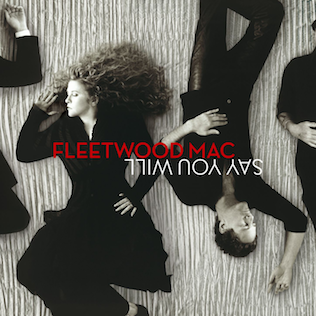
Say You Will is the 17th studio album by British-American rock band Fleetwood Mac, released on 15 April 2003. It followed 1995's Time and was their first album without vocalist/keyboardist Christine McVie, who had left the band in 1998 (although she made some brief appearances on it). Lindsey Buckingham took over primary keyboard duties for the album and Stevie Nicks added some limited additional keyboard parts.

The album would also be the band's final album with Buckingham, who was told to leave Fleetwood Mac in 2018.
Lindsey Buckingham hadn't recorded a studio album with Fleetwood Mac in 16 years when Say You Will was released in April 2003. 
His partner, Stevie Nicks, had been missing in action from the group since 1990, and while both joined the reunited group in 1997 for a tour and live album (The Dance), not to mention Bill Clinton's 1993 inauguration, it had been a long, long time since the two made new music for the Mac. 
They were lured back into the fold for...well, the specifics -- whether money, prestige, status, publicity, or creativity -- don't really matter, since the end result is the same, it's that Buckingham and Nicks have come home. 
This doesn't qualify as a full-fledged Fleetwood reunion, since Christine McVie isn't here, choosing to opt out of this high-profile return to the breach (although her playing is occasionally heard on the album). This results in a record that never quite sounds like Fleetwood Mac. Mick Fleetwood and John McVie are so grateful to have the two superstars back in the group that they cede ground to Buckingham and Nicks, who never collaborate as much as share space. Each singer/songwriter is given nine songs apiece, a move which, in itself, would not necessarily be a problem, but over the course of this lengthy, lengthy album, the evenhandedness starts to give the impression that this is two solo albums presented as a group effort. 
An assessment that's a little harsh, since the group can still conjure echoes of their classic sound, but the division of work is so deliberate and their work so dissimilar, it can't help but feel like two separate pieces pushed together to make the whole. 
Which is where Christine McVie becomes a critical factor. While never a star like Nicks, nor possessing the mad genius of Buckingham, McVie was a strong, likeable songwriter whose gently melodic works balanced the extremities of her bandmates while also forcing them to choose the best material to fit the record. 
Add to this that Fleetwood Mac have decided to run wild with the length of a CD, producing a record that is significantly longer than the messy, chaotic Tusk, but without its inspired insanity or depth of sound and character. 
Here, even if most songs are in the four-minute ballpark, they all feel longer, partially because the album clocks in at nearly 80 minutes and the sequencing flows as it was designed by committee. So, Say You Will winds up occupying a strange middle ground, often feeling as if it was Lindsey Buckingham and Stevie Nicks' albums bouncing around on shuffle play, but also occasionally flashing moments that are purely, satisfyingly Fleetwood Mac. 
Although there are occasional misguided attempts to modernize the songs -- most notably drum loops on some of Nicks' songs -- none of the songs sound as if the band were forcing themselves to sound contemporary. 
Sure, it sounds commercial, but that's the band's idiom -- what's important is that it never sounds compromised, it sounds as if the band is at once trying too hard while being unwilling to sacrifice individual moments for the greater good. 
So, Say You Will straddles many lines at once. Nicks' material is better-realized than many of her recent albums, but Buckingham's always sounds as if it should be wilder than it is (it should all sound as unrestrained as his guitar, which is continually surprising throughout the record). 
It never sounds like classic Fleetwood Mac, nor does it sound modern. It often sounds like solo albums, but without the freedom that allows. 
Most of these problems derive merely from the length. Cut out half of the record -- have it weigh in at nine or ten songs and run no longer than 45 minutes -- and it would have been a good, solid comeback, perhaps even eclipsing the uneven Tango in the Night. 
But there are too many songs, simply too much to make Say You Will work, even if there is enough to admire to make you wish it did. 


Track listing​

1.  What's the World Coming To?  (Lindsey Buckingham, Julian Raymond) - 3:48 
2.  Murrow Turning Over in His Grave  (Buckingham) - 4:12 
3.  Illume (9-11)  (Stevie Nicks) - 4:51 
4.  Thrown Down  (Nicks) - 4:02 
5.  Miranda  (Buckingham) - 4:18 
6.  Red Rover  (Buckingham) - 3:58 
7.  Say You Will  (Nicks) - 3:49 
8.  Peacekeeper  (Buckingham) - 4:11 
9.  Come  (Buckingham, Neale Heywood) - 5:59 
10.  Smile at You  (Nicks) - 4:33 
11.  Running Through the Garden  (Nicks, Ray Kennedy, Gary Nicholson) - 4:34 
12.  Silver Girl  (Nicks) - 3:59 
13.  Steal Your Heart Away  (Buckingham) - 3:33 
14.  Bleed to Love Her  (Buckingham) - 4:06 
15.  Everybody Finds Out  (Nicks, Rick Nowels) - 4:29 
16.  Destiny Rules  (Nicks) - 4:26 
17.  Say Goodbye  (Buckingham) - 3:26 
18.  Goodbye Baby  (Nicks) - 3:52 

Deluxe edition bonus disc
19.  Love Minus Zero/No Limit  (Bob Dylan) - 4:11 
20.  Not Make Believe  (Nicks) - 4:28 
21.  Peacekeeper (Live from Sessions@AOL)  (Buckingham) - 4:16 
22.  Say You Will (Live from Sessions@AOL)  (Nicks) - 3:50 

Note 
"Bleed to Love Her" was previously available on The Dance as a live version


Fleetwood Mac

Additional musicians


Production
  • Lindsey Buckingham – producer, engineer
  • Rob Cavallo – producer (5, 6, 9, 13, 14), A&R
  • John Shanks – producer (1, 8)
  • Ken Allardyce – engineer
  • Ken Koroshetz – engineer
  • Ray Lindsey – engineer, band technician
  • Mark Needham – engineer, mixing (1-15, 17, 18)
  • Chris Lord-Alge – mixing (16)
  • Bernie Grundman – mastering
  • Joe Bozzi – mastering assistant
  • Mike Fasano – band technician
  • Bruce Jaccoby – band technician
  • Garner Knutsen – band technician
  • Mike Zablow – band technician
  • Stephen Walker – art direction
  • Keith Carter – "Hands 1991" photography
  • Karen Johnston – photography
  • Neal Preston – photography
  • Herbert W. Worthington – photography

Studios

  • Recorded at The Bellagio House; Ocean Way Recording (Hollywood, California); Lindsey's garage (Los Angeles, California); Cornerstone Studios (Chatsworth, California).
  • Mixed at Cornerstone Studios; Conway Studios (Hollywood, California); Image Recording Studios (Los Angeles, California).
  • Mastered at Bernie Grundman Mastering (Hollywood, California).

Management

  • Tony Dimitriades and Robert Richards at East End Management – management for Lindsey Buckingham
  • Howard Kaufman and Sheryl Lewis at HK Management – management for Stevie Nicks
  • Carl Stubner at Immortal Management – management for Mick Fleetwood

Notes
Release Date:  April 15, 2003 
Recording Location:  Cornerstone Recording Studios / Lindsey's Garage / Ocean Way Recording / The Bellagio House
Genre:  Pop/Rock
Duration:  1:16:15 

Label - Reprise

Wednesday, 4 May 2022

posted by record facts

Camino Palmero is the debut studio album recorded by American alternative band the Calling. It was released by RCA Records on July 10, 2001. It contains their hit single "Wherever You Will Go". The title of the album comes from a Los Angeles street where band members Alex Band and Aaron Kamin first met. The record has many grunge influences and also has a lot of guitar solos.

Camino Palmero peaked at number 36 on Billboard 200 and was certified Gold by RIAA. 
The album deals with romantic love, relationships, break up and betrayal.
Bands like the Calling are a perfect example of what was wrong with "modern rock" radio in 2001. Utterly homogenous and virtually interchangable with any number of the "here today, gone tomorrow" one-hit wonders that emerged during the turn of the century, the L.A.-based quintet had the radio formula down to the letter: take a bunch of reasonably decent-looking 20somethings; force feed them a steady diet of Matchbox Twenty, Third Eye Blind, and Eve 6; exchange canned melodrama for passion and depth; then polish to a slick, glossy sheen and watch as the highly coveted teen dollars roll in. 
You can't really blame the Calling for wanting to cash in: they obviously invested every ounce of energy into songs like the pseudoanthemic "Unstoppable" and the requisite radio ballad, "Wherever You Will Go," but there is not one element on this album -- from the quiet/loud verse/chorus staple to frontman Alex Band's watered-down, Eddie Vedder-inspired sensitive guy wailings -- that hasn't been done before. And done much, much better. 

The cover art of the album represents the platforms 5 and 6 of the Santa Maria Novella railway station in Florence, Italy. 


Track listing

1.  Unstoppable - 3:59 
2.  Nothing's Changed - 4:44 
3. Wherever You Will Go - 3:28 
4.  Could It Be Any Harder - 4:41 
5.  Final Answer - 4:34 
6.  Adrienne - 4:30 
7.  We're Forgiven - 4:31 
8.  Things Don't Always Turn Out That Way - 4:11 
9.  Just That Good - 3:54 
10.  Thank You - 2:58 
11.  Stigmatized - 4:31 

The Calling

Additional musicians

Technical

  • Ron Fair – Executive Producer
  • Tiago Becker – Assistant Engineer
  • Marc Greene – Engineer
  • Robert Hadley – Mastering
  • Frank Harkins – Art Direction, Design
  • Chris Lord – Mixing
  • Stephen Marcussen – Mastering
  • Doug Sax – Mastering
  • Matt Silva – Mixing
  • Marc Tanner – Producer
  • David Thoener – Engineer, Mixing

Notes
Released: J uly 10, 2001 
Recorded:  1999-2001 Studio Cherokee Studios (Hollywood, California)
Genre:  Post-grunge, Alternative rock 
Length:  46:06 

Label - RCA 

Tuesday, 3 May 2022

posted by record facts

Milagro is the seventeenth studio album by Santana, released in 1992.
Milagro, which means “miracle” in Spanish, was dedicated to the lives of Miles Davis and Bill Graham, and was Santana’s first album on the Polydor label after twenty-two years with Columbia Records. The album reached 102 in the Billboard 200.

The band has been altered by official addition of frequent sideman Raul Rekow and Karl Perazzols, replacement of longtime percussionist Armando Peraza. But this septet is still led by Carlos Santana and keyboardist Chester Thompson, with Alex Ligertwood singing. The record has a somewhat elegiac tone, beginning with a stage introduction by the late promoter Bill Graham, who was Santana‘s mentor and unofficial manager, being dedicated to Graham and Miles Davis, who also had died since the last album, and featuring an excerpt from a speech by Dr. Martin Luther King, Jr., solos taken from Davis and John Coltrane, and music written by Bob Marley, Coltrane, and Gil Evans. Despite the presence of all these heroic ghosts, however, Milagro is only an average Santana release, familiar-sounding but undistinguished, and it failed to arrest the band’s commercial slide,

Santana is the most successful practitioner of fusion because he understands the style not as a souped-up rock-jazz hybrid but as an embrace of musical pantheism. Elements of salsa, pop, blues, jazz, R&B, rock, world music and reggae work their way in and out of the arrangements on Milagro, due in no small part to the smarts of coproducer Chester Thompson, whose virtuoso keyboard work shares the soloing spotlight with Santana’s guitar.

Santana’s vision of fusion grew out of the same creative upheavals responsible for the social and political ferment of the Sixties and early Seventies. The difference between Santana and other guitarists, such as Alvin Lee, who first came to prominence as a result of the Woodstock documentary is that Santana never stopped considering his music an outgrowth of deeply held spiritual values.

Santana sees his music as an agent for political liberation and an expression of religious mysticism. He brings these elements into focus on Milagro, invoking the power of music to “free the people” one minute and likening Jesus Christ to Martin Luther King the next. His vision of Christ as an agent for justice stands in stark contrast to the fundamentalist cant underlying most North American Christian propaganda, extends his fascination with Eastern religions and marks a return to his own roots in liberation theology, an important philosophical strain of Latin American Catholicism.

On the musical front, changing labels has proven a tonic for Santana’s guitar playing. His attack is razor sharp, and his solos — on the title track, “Red Prophet,” “Gypsy/Grajonca” and “We Don’t Have to Wait” — rank among his best.

Milagro, which means “miracle,” is dedicated to two people who died last year and who were central to Santana’s life as an artist — Bill Graham, who gives the opening introduction, and Miles Davis, who plays a short, unaccompanied coda on the set-closing “A Dios.” It is a worthy tribute.


Track listing
  1. "Introduction   Bill Graham (Milagro)"  (M. Johnson, Bob Marley, Carlos Santana) – 7:34
  2. "Somewhere in Heaven"  (Alex Ligertwood, Santana) – 9:59
  3. "Saja/Right On"  (Joe Roccisano/Earl DeRouen, Marvin Gaye) – 8:51
  4. "Your Touch"  (Santana, Chester D. Thompson) – 6:34
  5. "Life Is for Living"  (Pat Sefolosha) – 4:39
  6. "Red Prophet" { Instrumental } (Benny Rietveld) – 5:35
  7. "Agua que va caer"  (Carlos Valdes, Eugene "Totico" Arango) – 4:22
  8. "Make Somebody Happy"  (Santana, Ligertwood) – 4:14
  9. "Free All the People (South Africa)"  (Jackie Holmes) – 6:04
  10. "Gypsy/Grajonca"  (Santana, Thompson) – 7:09
  11. "We Don't Have to Wait"  (Santana, Armando Peraza, Thompson) – 4:34
  12. "A Dios"  (Santana, John Coltrane, Gil Evans) – 1:21

Personnel

  • Carlos Santana — guitar, vocals
  • Chester D. Thompson — keyboards, horn/string arrangements, backing vocals
  • Benny Rietveld — bass
  • Walfredo Reyes, Jr. — Drum set, percussion
  • Raul Rekow — timbales, percussion, vocals
  • Karl Perazzo — timbales, guido, quinto, bongo, vocals
  • Billy Johnson — drums (“Right On” and “Your Touch”)
  • Tony Lindsay — vocals (“Life Is for Living”, “Make Somebody Happy”)
  • Alex Ligertwood — vocals (“Somewhere in Heaven”)
  • Larry Graham — vocals (“Right On”)
  • Rebeca Mauleon — piano (“Agua que va a caer”)
  • Wayne Wallace — trombone (“Agua que va caer”, “Free All the People” and “Milagro”)
  • Bill Ortiz — trumpet (“Agua que va caer”, “Free All the People” and “Milagro”)
  • Robert Kwock — trumpet (“Agua que va caer”, “Free All the people” and “Milagro”)
  • Melecio Magdaluyo — saxophone (“Agua que va caer”, “Free All the People” and “Milagro”)
  • Bad River Singers — vocal chant (“Agua que va caer”)
  • John Philip Shenale – string programming
  • Lygia Ferragallo – backing vocals

Notes
Released:  May 1992
Recorded at:   Studio The Plant Studios, Sausolito, California
Genre:   Latin rock
Length:  70:23

Label - Polydor Records

posted by record facts

Johan is een Nederlandse band rondom zanger/gitarist Jacob de Greeuw, opgericht in Hoorn. Vanwege de vele personeelswisselingen in de band, kan gesteld worden dat De Greeuw het enige vaste bandlid was en hiermee de spil is van de groep. 
De band was opgericht als Visions of Johanna in 1990. In 1996 werd de naam ingekort tot Johan.

Pergola is het tweede album van de Nederlandse band Johan. Na het debuutalbum "Johan" hadden fans vijf jaar moeten wachten op een nieuw album van de band. 
De naam van het album is de naam van de straat waar voorman Jacco de Greeuw destijds woonde, in de Hoornse wijk Kersenboogerd. Het album kreeg veel goede kritieken en de band had zelfs een klein hitje met Tumble and Fall.

Pergola, de langverwachte tweede CD van de uit de eigen as herrezen Hoornse groep Johan, is bril­jant. Sterker nog, een betere gitaarpopplaat van eigen bodem zal dit jaar niet meer verschijnen – period! – en het is zelfs de vraag hoeveel buiten­lands geschut de komende tijd tegen deze feno­menale klasse opgewassen zal zijn. De nieuwe Guided By Voices kan er alvast niet aan tippen.

Maar terzake. Op Pergola staan twaalf songs en er zit geen zwakke tussen. En reken maar dat zanger, gitarist en songschrijver Jacco de Greeuw de lat hoog heeft gelegd. Hij citeert niet alleen soms let­terlijk de Beatles (‘How do you sleep’, parafraseert hij Lennon in How Does It Feel), een van de songs heet I Feel Fine en die achterstevoren afgespeelde gitaar in Why CP klinkt ook bekend), maar schurkt met zijn groep ook qua sound en songstructuur zéér regelmatig tegen de Fab Four aan.

Maar het kader is breder: ook Crowded House (Pergola), R.E.M. (I Mean I Guess), The Byrds (Tomorrow) en het reeds genoemde Guided By Voices keken over Jacco’s schouders mee en zagen dat ‘t weliswaar niet vernieuwend of eigenzinnig, maar wel verbijs­terend goed was. Beter nog, wat zeg ik, véél beter dan het al zo geroemde debuut van Johan, dat ruim vier jaar geleden verscheen. Want laten we vooral niet vergeten dat deze CD de vrucht is van een lange lijdensweg voor zowel De Greeuw als zijn groep en dat van de destijds verworven credits weinig meer over is.

Met wat fantasie laat Pergola zich dan ook beluisteren als een lineair verslag van het proces van diep vallen en moeizaam opstaan: de plaat opent met Tumble And Fall, halverwege lijkt het felle I Feel Fine knipogend aan te geven dat het allemaal heus wel meevalt en in het welhaast sym­fonische slotstuk Here (hoog Alan Parsons Project-gehalte!) strijkt men neer in het Hier & Nu. de enige tijd en plaats waar De Greeuw en zijn mannen met een CD als Pergola op hun plek zijn.


Track listing

1.  Tumble and Fall  (4:21) 
2.  Pergola  (4:06)
3.  I Mean I Guess  (3:36)
4.  Tomorrow  (2:09)
5.  Day Is Done  (2:55) 
6.  I Feel Fine  (2:51)
7.  Paper Planes  (3:31)
8.  Save Game  (3:04)
9.  How Does It Feel  (3:54)
10.  Why_CP  (3:38)
11.  Time and Time Again  (3:31)
12.  Here  (3:05)


Companies, etc.

Credits

Notes
Release:  2001
Genre:  Pop / Rock
totale tijdsduur:  40:41

Label: Excelsior Recordings

Sunday, 1 May 2022

posted by record facts

Mystery White Boy is a live album by American singer-songwriter Jeff Buckley released in 2000. 
This is a compilation of live recordings that Buckley's mother Mary Guibert compiled from DAT recordings of his supporting tour for Buckley's album Grace. 
Also known as Mystery White Boy: Live '95–'96, the album earned mixed to positive critical views and was also a commercial success in the artist's native U.S., hitting #12 on the Top Internet Albums chart released by Billboard. 
It's hard to judge Jeff Buckley's live collection Mystery White Boy: Live '95-'96 without thinking of what might have been, without realizing that he never fulfilled the extent of his potential. 
If that sounds harsh, it's not meant to be -- it's more of an acknowledgment of the tragedy of his premature death. After all, Mystery White Boy simply wouldn't exist if Buckley was alive when it was released in the spring of 2000. That wasn't the case with Sketches for My Sweetheart the Drunk, the first posthumous release of his unreleased recordings. 
Those tapes were the foundation of what would have become his second album; the tapes that formed Mystery White Boy were DAT recordings of his supporting tour for Grace (which the album was named after), many of which weren't intended for release at any time. 
Once Buckley unexpectedly passed away, they became a core part of his legacy, particularly because his concerts were notoriously unpredictable and thrilling, sometimes transcendent (at least according to partisan fans). 
Mystery White Boy doesn't quite convey that sense of majesty, largely due to the uneven sound quality and the fact that it's a compilation, thereby lacking the ebb and flow of a real live show. Buckley's mother Mary Guibert claims in the liner notes that the compilation worked better than any individual concert, and she may well be right, since the album has a consistency that a full concert may not have. Still, it's hard not to slightly miss the dramatic rhythm of a real show. 
Even so, Mystery White Boy is a valuable document, since it does prove that Buckley could transcend time and place with a live show. 
That might only be of interest to hardcore fans, but they'll still thrill to this, all the same. 


Track listing

1.  Dream Brother  (Club Logo, Hamburg, Germany, on February 22, 1995) - 8:48 
2.  I Woke Up in a Strange Place  (Palais Theatre, Melbourne, Australia, on February 28, 1996) - 5:05 
3.  Mojo Pin  (Theatre de Fourvière, Lyon, France, on July 4, 1995) -  6:06 
4.  Lilac Wine  (Palais Theatre, Melbourne, Australia, on February 28, 1996) - 5:19 
5.  What Will You Say  (Theatre de Fourvière, Lyon, France, on July 4, 1995) - 7:34 
6.  Last Goodbye  (Olympia, Paris, France, on July 7, 1995) - 4:58 
7.  Eternal Life  (Palais Theatre, Melbourne, Australia, on February 28, 1996) - 5:57 
8.  Grace  (Palais Theatre, Melbourne, Australia, on February 28, 1996) - 5:39 
9.  Moodswing Whiskey  (Palais Theatre, Melbourne, Australia, on February 28, 1996) - 5:37 
10.  The Man that Got Away  (Great American Music Hall, San Francisco, CA on May 4, 1995) - 3:46 
11.  Kanga-Roo  (The Phoenician Theatre, Sydney on September 6, 1995)  - 10:23 
12.  Hallelujah/I Know It's Over (medley)  (King Theatre, Seattle, WA on May 7, 1995) - 9:18 


Companies, etc.

Credits

Notes
Release Date:  May 9, 2000 
Recording Date:  February 22, 1995 - February 28, 1996
Genre:  Adult Alternative Pop/Rock
Styles:  Contemporary Singer/Songwriter
Duration:  1:18:36 

Label - Columbia